
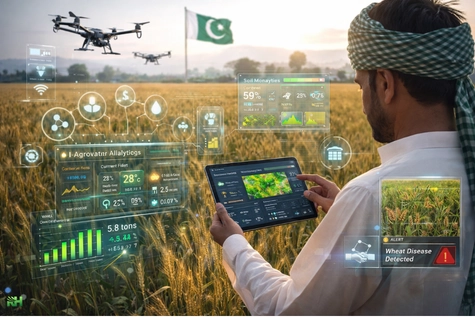
Agriculture has always been the backbone of Pakistan’s economy, accounting for nearly 19% of GDP and employing millions of people nationwide. Yet, traditional farming methods face persistent challenges, such as water scarcity, unpredictable weather, pest infestations, and low crop productivity. To tackle these issues, AI agriculture technology is increasingly becoming the lifeline of modern Pakistani farms.
Artificial intelligence (AI) in agriculture leverages smart systems, machine learning, and data-driven insights to improve efficiency, reduce waste, and increase yields. From precision irrigation and soil monitoring to crop health detection and yield prediction, AI is transforming the way Pakistani farmers approach farming.
With rapid smartphone adoption, growing fintech solutions for farmers, and government-backed digital initiatives, AI agriculture is positioned to revolutionize the country’s farming ecosystem over the next few years.
How AI Agriculture Is Transforming Farming in Pakistan
AI technology is being applied in multiple ways across the country, each addressing specific challenges in agriculture.
1. Smart Irrigation Systems
Water scarcity is a major issue for Pakistani farmers, especially in arid regions such as Sindh and southern Punjab. AI-powered smart irrigation systems use sensor data, weather forecasts, and soil analysis to determine the optimal amount of water needed for crops.
Key features include:
- Soil Moisture Sensors: Measure real-time water levels in soil to prevent over- or under-irrigation.
- AI-Powered Scheduling: Algorithms calculate the best time to water crops, factoring in weather and soil type.
- Remote Control: Farmers can manage irrigation via mobile apps, reducing labor costs and time.
Smart irrigation systems not only conserve water but also improve crop quality and yield, making farming more sustainable and profitable. For instance, wheat and rice farmers in Punjab have reported 20–30% higher yields after implementing AI-based irrigation systems.
2. Crop Health Monitoring
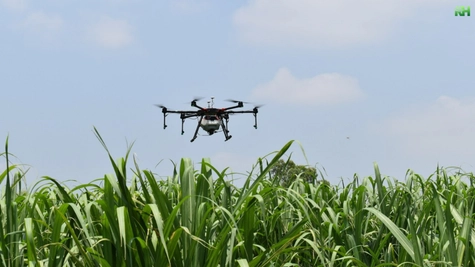
One of the biggest threats to crops in Pakistan is disease and pest infestation. AI agriculture uses computer vision and drone technology to monitor crop health at scale.
- Drones capture high-resolution images of entire fields.
- AI algorithms analyze these images to detect early signs of diseases, pest infestations, or nutrient deficiencies.
- Farmers receive real-time alerts with recommended actions.
For example, cotton farmers in Sindh are using AI-powered drone surveillance to detect infestations by cotton bollworm, enabling them to act before the crop suffers significant losses. Early detection can reduce pesticide usage by up to 40%, making farming safer and more environmentally friendly.
3. Predictive Yield Forecasting
AI agriculture models can predict crop yields using historical data, soil information, and weather patterns. Accurate yield prediction allows farmers to:
- Plan harvest schedules efficiently
- Optimize storage and supply chain logistics
- Make data-driven decisions on crop rotation and resource allocation
Moreover, predictive analytics helps government agencies and agribusinesses plan for food security, reducing post-harvest losses in staple crops like wheat, rice, and sugarcane.
4. Automated Farm Equipment
AI-powered machinery is gradually transforming Pakistani farms, particularly for labor-intensive crops. These include:
- Robotic harvesters for fruits and vegetables
- AI-guided planters for uniform crop spacing
- Drones for spraying fertilizers and pesticides
Automation reduces labor costs, increases efficiency, and allows farmers to scale operations. Small and medium-scale farmers, who often struggle with labor shortages during peak seasons, are finding AI machinery invaluable for timely sowing and harvesting.
5. AI-Based Market Insights
AI agriculture goes beyond field operations and extends to market intelligence. Using predictive analytics and historical data, AI can provide:
- Real-time pricing updates for crops
- Forecasts of commodity demand and supply trends
- Recommendations for profitable crop selection
For example, a farmer growing sugarcane can use AI tools to determine when and where to sell the crop for maximum profit. This reduces dependency on middlemen and improves income stability for rural farmers.
Case Studies: AI Agriculture Adoption in Pakistan
Several innovative projects in Pakistan highlight how AI is changing agriculture:
- Punjab Smart Agriculture Initiative: The government has partnered with tech companies to deploy AI sensors across wheat and rice fields. This has improved water efficiency by 25% and increased crop yields significantly.
- Sindh Cotton Drone Program: Cotton farmers use drones integrated with AI for pest monitoring. Early intervention has reduced cotton bollworm damage by 30–35%.
- Karachi Agri-Tech Startups: Companies like AgriTech Pakistan are developing mobile apps that combine AI crop recommendations with market price insights, helping smallholder farmers improve productivity and profitability.
Challenges of AI Agriculture in Pakistan
Despite its promise, AI agriculture faces several hurdles:
- High Initial Costs: Sensors, drones, and AI software can be expensive for small-scale farmers.
- Digital Literacy: Many rural farmers lack the skills to use AI tools effectively.
- Connectivity Issues: Remote areas often have limited internet access, affecting real-time AI operations.
- Data Scarcity: AI models require large datasets to be accurate; local agricultural datasets are still limited for some crops.
- Maintenance of AI Equipment: Drones, sensors, and AI devices require technical support, which is not always available in rural regions.
Overcoming these challenges will require government support, private-sector innovation, and community training programs.
The Future of AI Agriculture in Pakistan
The adoption of AI agriculture is expected to accelerate dramatically over the next five years. Future developments include:
- IoT-Integrated AI Systems: Smart sensors and connected devices will provide even more accurate data for decision-making.
- Voice-Enabled Assistance: Farmers will interact with AI through voice commands in local languages, removing literacy barriers.
- Sustainable Farming: AI will optimize inputs like water, fertilizer, and energy, reducing environmental impact.
- Agri-Tech Startups Expansion: New companies will offer affordable AI solutions tailored for smallholder farmers.
- AI-Driven Government Policies: Data-driven insights will help policymakers improve crop planning, subsidies, and disaster preparedness.
- Climate Resilience: AI will help farmers adapt to changing weather patterns, minimizing losses during floods or droughts.
By combining AI technology with traditional farming knowledge, Pakistan can improve productivity, sustainability, and food security nationwide.
Conclusion
AI agriculture technology is rapidly reshaping Pakistan’s farming landscape. From smart irrigation and crop monitoring to predictive yield forecasting and market insights, AI empowers farmers to make informed decisions, conserve resources, and increase profitability.
While challenges like high costs, digital literacy gaps, and connectivity issues remain, government initiatives, startup innovations, and educational programs are accelerating adoption.
As AI agriculture continues to evolve, it will not only enhance farm productivity but also strengthen Pakistan’s food security and rural economy. By 2026, AI-driven farming solutions are set to become indispensable tools for farmers across the country, making agriculture smarter, more efficient, and more sustainable.
Stay with Rush Headline for all the latest news